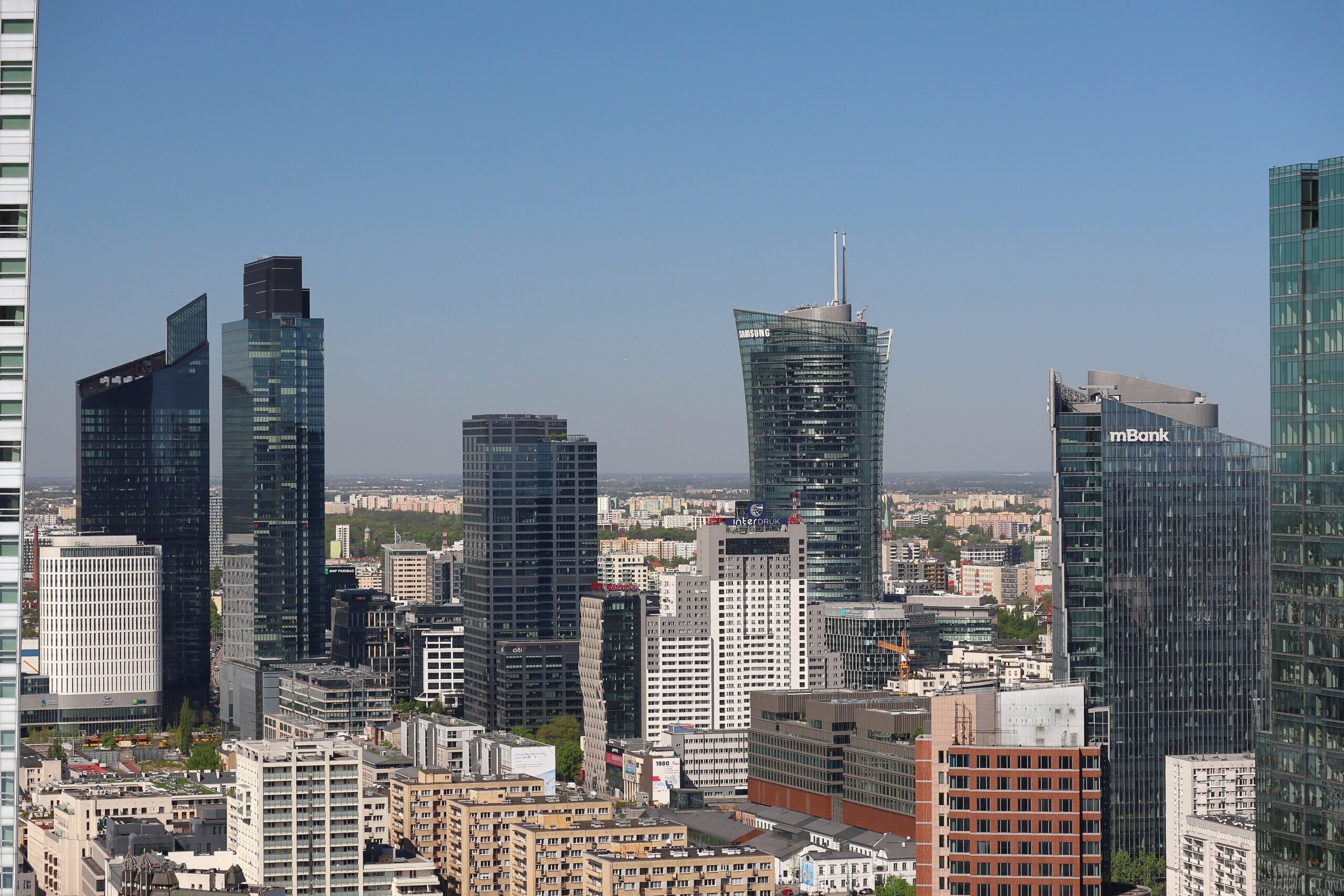
Germany’s real estate investment market reached €23.6 billion in the first nine months of 2026, 8 per cent more than a year earlier. Poland’s commercial market drew €4.7 billion, an increase of 81 per cent and its best nine-month result since 2018. Germany is still almost four times larger in commercial property. But the momentum has shifted: German growth is fading as the ECB tightens, while Poland is pulling in capital that wants yield and secure income.
Germany: still growing, but losing speed
According to Cushman & Wakefield, commercial investment in Germany totalled €17.85 billion between January and September 2026, 11 per cent more than a year earlier. Residential property added €5.75 billion, roughly level with 2025. The growth rate has halved since the summer: after six months the overall market was up 20 per cent, after nine months it is up 8. The third quarter was the second weakest of the past two years, and commercial volume is still 29 per cent below the five-year average and 44 per cent below the ten-year average.
The mix has changed as well. Logistics and industrial property is now the largest commercial class with about €4.1 billion (+18 per cent), ahead of offices at €3.76 billion (−2 per cent). Retail volume almost halved to €2.2 billion, and hotels fell by close to 40 per cent to €960 million.
The big cities are losing their grip
Among the top seven cities the picture is split. Berlin recorded €1.14 billion, 53 per cent less than a year earlier, Hamburg €1.07 billion (−41 per cent) and Munich €1.31 billion (−13 per cent). Düsseldorf, by contrast, rose by 48 per cent to €1.02 billion and Frankfurt by 20 per cent to €858 million. In today’s market, volume follows individual deals and income profiles rather than city names, and a single large transaction can swing a city’s annual result.
Prime is priced, the rest needs a discount
Cushman & Wakefield sums up the pricing situation clearly: price discovery for prime assets is well advanced, while non-prime properties need additional discounts to reflect capex and letting risk. Prime office yields in the top seven cities held at an average of 4.73 per cent in the third quarter according to CBRE figures reported by Konii, while yields in B-cities and regional centres have already moved up. For apartment blocks, Cushman & Wakefield sees the prime yield stable at 3.80 per cent for now.
The direction of travel is upwards rather than down. Already in mid-year Cushman & Wakefield expected a slight rise in prime office yields by the end of 2026 on the back of higher bond yields, and warned that higher financing costs would make large-volume deals harder. Savills describes the third quarter as a market in which more product is coming to the table and has to meet new price realities.
Poland: the best nine months since 2018
Poland is moving in the opposite direction. Avison Young counts €4.7 billion of commercial investment in 93 transactions between January and September 2026, 81 per cent more than a year earlier. Retail led with €1.5 billion, followed by warehouses with €1.3 billion and offices with €1.1 billion. Portfolio purchases drove much of the retail and logistics volume, and buyers concentrated on assets with stable, long-term income. One of the notable office deals was Eastnine’s acquisition of The Bridge in Warsaw.
Pricing explains much of the appeal. BNP Paribas Real Estate puts Polish prime yields at 6.25 per cent for offices and 6.50 per cent for shopping centres, while logistics compressed by 25 basis points to 6.00 per cent in the second quarter. A prime office in Warsaw therefore still yields roughly 150 basis points more than a prime office in Germany’s top seven cities. The same report cautions that rising euro swap rates could put pressure on pricing and financing costs in the coming quarters.
Rates: Frankfurt has turned, Warsaw is waiting
The interest rate backdrop has changed noticeably in 2026. The ECB raised its rates in June and again in September, lifting the deposit rate to 2.50 per cent, and left it there on 29 October. The next decision is due on 17 December. At the same time the ECB’s bank lending survey points to tighter credit standards across the euro area. In Poland, the Monetary Policy Council cut once this year, in March, and kept the reference rate at 3.75 per cent at its meeting on 3 and 4 November.
For cross-border investors this matters on both sides of the border: most Polish commercial property is priced and financed in euros, so ECB decisions feed directly into Polish deal financing as well. The yield premium in Poland is a cushion, not an exemption.
What this means for investors
Germany: selective buying in a buyer’s market. Outside the prime segment, sellers increasingly have to accept discounts. That opens entry points for investors with equity and a clear capex plan, especially in B-cities and in older office and retail stock that can be repositioned.
Poland: competition is rising. The jump in volume shows that institutional capital is back. In logistics, yields are already compressing. Investors who want the Polish yield premium should look at regional offices, retail parks and sale-and-leaseback deals before more capital arrives.
Both markets: income first, financing second, growth third. With rates rising in the euro area, deals are underwritten on secure cash flow. Long leases, strong tenants and conservative leverage decide whether a deal closes.
Conclusion
Germany remains Europe’s deepest real estate market, but in 2026 it is a market of selective buyers and repriced non-prime stock. Poland is enjoying its strongest year in almost a decade, supported by higher yields and growing investor confidence. For investors active in both countries, the gap between the two markets is less about size than about pricing, and that gap is where the opportunities lie.
Talk to us
Are you looking to buy, sell or reposition commercial property in Germany or Poland, or do you want to know what your asset is worth at today’s yields? Prime East analyses markets, pricing and exit routes, and brings investors, owners and developers together. Contact our team for a confidential discussion of your investment or project enquiry.
Disclaimer: This article is for general information only and does not constitute investment, legal or tax advice. All figures are based on publicly available sources.
Sources
- Cushman & Wakefield: Deutscher Immobilien-Investmentmarkt Q1–Q3 2026
- Cushman & Wakefield: Wohninvestmentmarkt Deutschland Q3 2026
- Cushman & Wakefield: MarketBeat Büro-Investment Deutschland Q2 2026
- CBRE (via Konii): Deutscher Büroinvestmentmarkt legte in den ersten neun Monaten 2026 deutlich zu
- Savills (via Konii): Immobilieninvestmentmarkt Deutschland: Größeres Angebot trifft auf neue Preisrealitäten
- Avison Young (via Eurobuild CEE): Inwestycje w nieruchomości w Polsce rosną o 81 proc.
- BNP Paribas Real Estate Poland: Review: Investment Market in Poland Q2 2026
- Deutsche Bundesbank / ECB: Geldpolitische Beschlüsse vom 29. Oktober 2026
- Kagels Trading: EZB-Zinsentscheid: Termine und Zinsentwicklung 2026
- MS Aktuell: EZB hält Zinsen stabil
- Bank.pl: Stopy NBP w listopadzie ’26 bez zmian