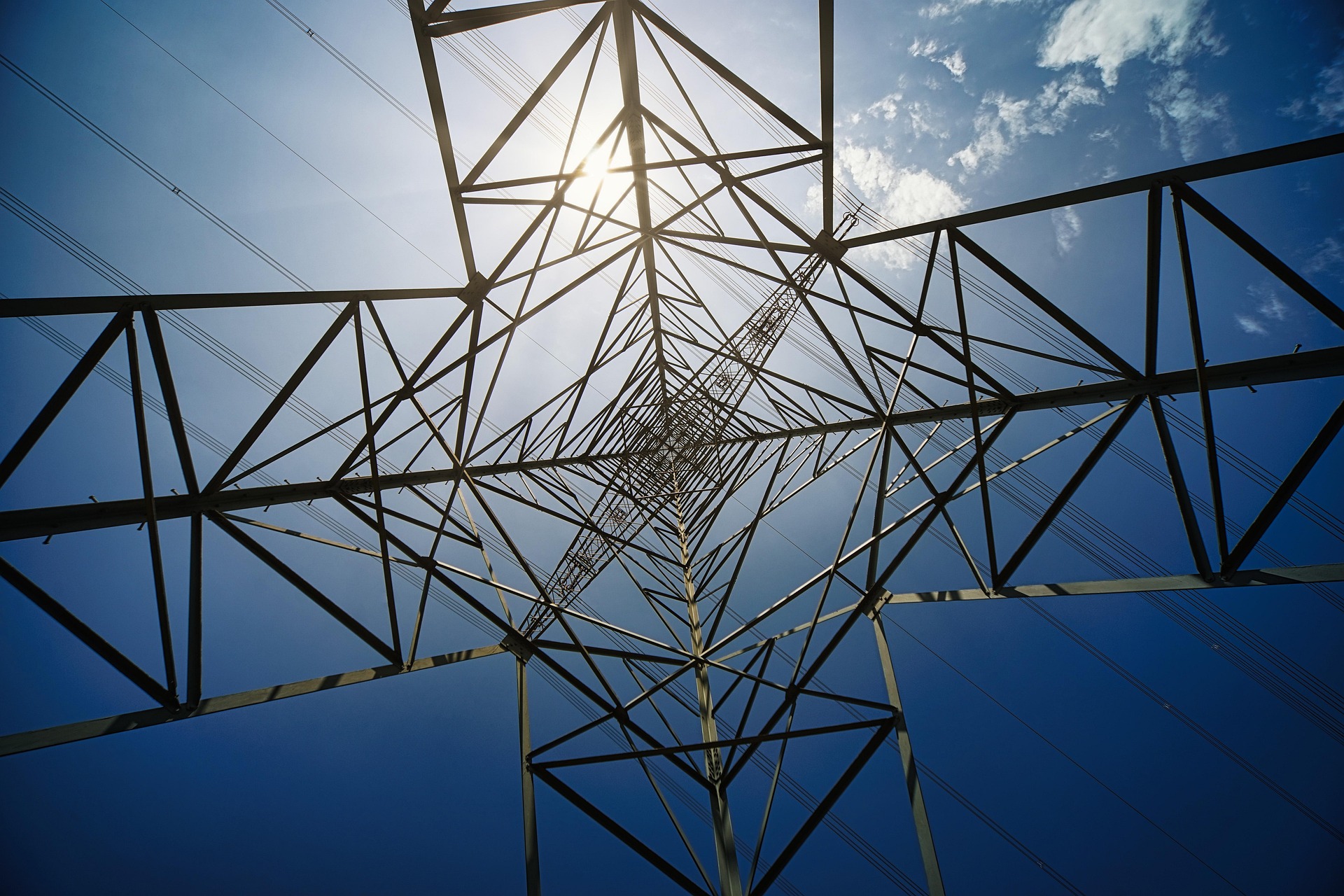
In late July, Warsaw formally threw its hat into the ring: Poland wants one of the seven EU-backed AI gigafactories while private developers are already locking in grid connections at gigawatt scale. For real estate investors, the benchmark for the entire market is shifting.
Brussels’ compute billions reach Warsaw
On 28 July 2026, Poland signed the Joint Procurement Agreement of the EuroHPC Joint Undertaking, formally entering the EU’s AI Gigafactories programme. The bid targets a medium-scale facility designed for at least 75,000 AI accelerators; a project that could attract more than PLN 10 billion (around €2.3 billion) of investment. In the first round, EuroHPC will select seven projects (four medium, three large sites); the call closes on 12 November 2026, selection is expected in early 2027, and the first gigafactories should be operational from 2028. For the property market this is more than symbolism: a publicly anchored compute factory of this scale acts as an anchor demand driver for land, power and grid capacity and as a catalyst for an entire supplier ecosystem.
From niche market to gigawatt pipeline
The bid lands in a market that is already changing gear. Poland’s data centre capacity stands at roughly 703 MW in 2026 and is projected to approach 1,000 MW by 2030; the investment market is estimated at about USD 2.17 billion for 2026, rising to USD 4.29 billion by 2031 (CAGR ~14.6%), with around 935 MW of capacity additions over that period. Microsoft is completing its PLN 2.8 billion (approx. USD 704 million) programme to expand Polish cloud and AI infrastructure the largest hyperscaler commitment ever announced in Poland. And in the north of the country, WBS Power is advancing a hyperscale campus with 3.2 GW of planned capacity, for which grid connection conditions covering the full load have already been secured. For context: that is more than four times today’s entire market.
The grid: bottleneck and Europe’s largest energy construction site
Whether pipeline becomes reality will be decided at the point of connection. Warsaw operates with an estimated grid deficit of 150–200 MW and connection procedures can take up to 18 months a core theme we analysed in earlier pieces on Poland’s secondary markets. The transmission operator PSE’s response is historic: roughly PLN 64 billion (approx. USD 16 billion) of grid investment through 2034, some 4,800–5,000 km of new 400 kV lines and explicit preparation of the network for around 3 GW of data centre load by 2035 and 5 GW by 2040. Whoever controls sites with bankable connection commitments today holds the market’s scarcest asset.
Capital follows the kilowatt-hour
Colliers’ “EMEA Data Center Markets H1 2026” report captures the new logic: growth is now defined by power availability, not demand – and capital is rotating out of energy-constrained FLAP-D hubs into new markets, explicitly including Poland. CBRE puts Poland’s professional colocation capacity at around 200 MW, with the potential to double to 500 MW by 2030. The combination of EU compute funding, hyperscaler commitments and PSE’s build-out programme is moving Poland from an opportunistic satellite to a strategic target market in capital allocation with yield premiums over Western Europe that this early phase still offers.
What this means for investors
- Exploit the anchor effect: a successful gigafactory bid would upgrade location clusters (power, fibre, talent) land and standing assets around promising candidate sites deserve attention now.
- The grid connection is the value: secured connection capacity not the land is the scarcest production factor; projects with bankable PSE conditions structurally trade at a premium.
- Window before the 2027 award: between the call deadline (November 2026) and selection (early 2027), positions can be built before the market prices in the decision.
- Underwrite across disciplines: technical, energy and real estate due diligence belong together Prime East, with its PE Property Solutions unit, works for its investors precisely at this property–technology–energy interface.
Conclusion
Poland is betting on gigawatts with public capital from Brussels, private hyperscaler billions and the largest grid expansion programme in its history. Not every announced megawatt will be built. But the direction is clear: the market is professionalising faster than many investors are adjusting their allocations. Those who master the energy and connection question are buying today into a market that will look different by 2028.
Note: This article is for information purposes only and does not constitute investment, legal or tax advice.
Sources
- Notes from Poland – Poland enters race to host EU-backed AI gigafactory
- PSNC – Poland Announces Its Participation in the EU’s AI Gigafactories Program
- DatacenterDynamics – Microsoft to invest $704m into expanding Polish data centers
- datacenterHawk – Poland’s Data Center Boom: 3.2GW, Below-€10M Builds, and Europe’s Largest Energy Construction Site
- PR Newswire – WBS Power Advances 3.2 GW Energy Infrastructure for Hyperscale Data Center Campus
- EurobuildCEE – Poland to benefit from data centre realignment (Colliers EMEA H1 2026)
- EurobuildCEE – Data centres spread out across the region
- Mordor Intelligence – Poland Data Center Market Size, Trends & Forecast
- GlobeNewswire/Arizton – Poland Data Center Market Investment Analysis Report 2026–2031
- Prime East – Warsaw hits the grid ceiling: Poland’s data-center capital discovers the secondary markets