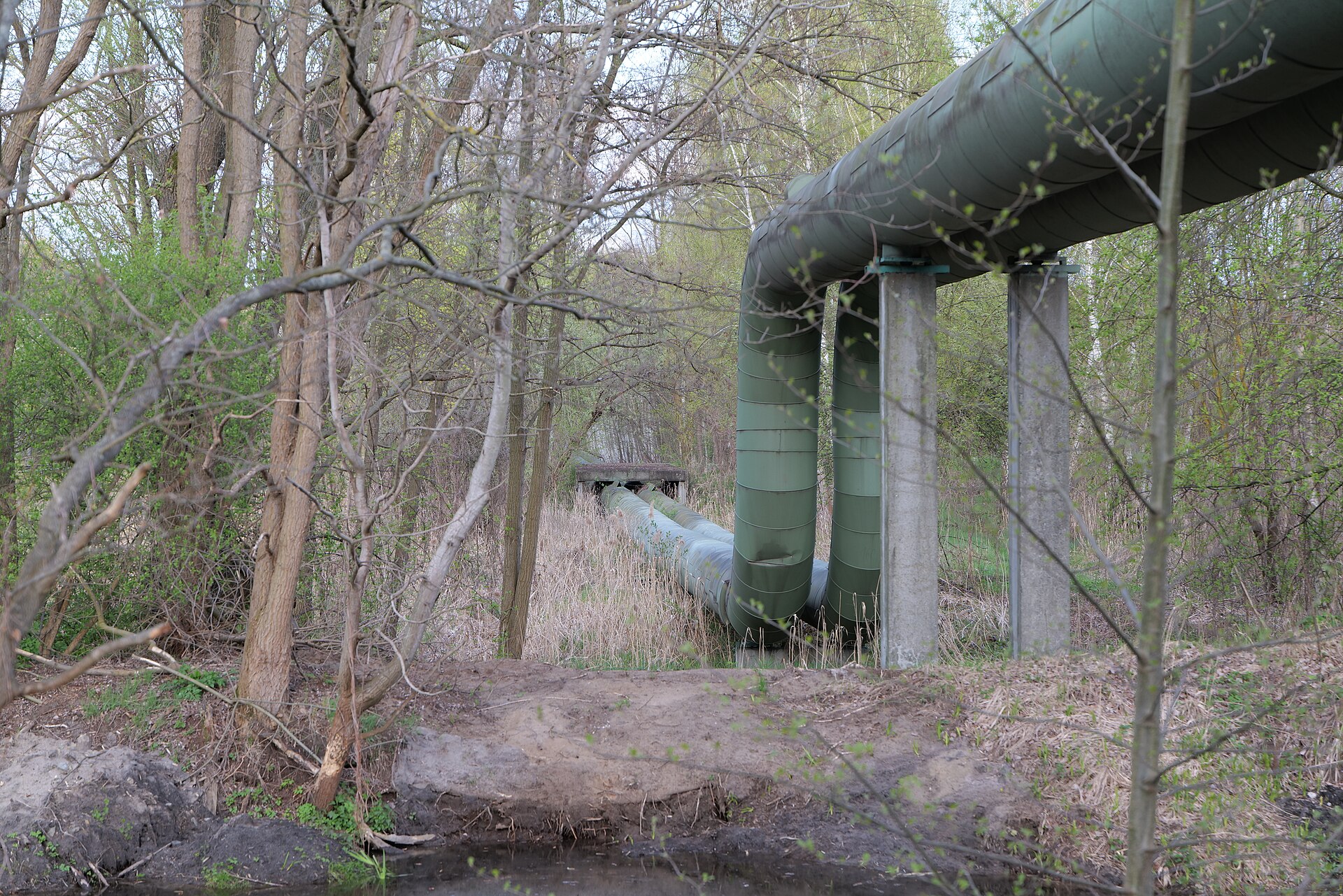
From 2027, 90 per cent of a German data centre operator’s trade tax is set to follow its grid connection to the host town instead of the head office. At the same time Berlin is softening the duty to reuse waste heat, while towns like Trebbin write the heat into their own plans and Polish utilities in Poznań, Wrocław and at PGE’s power plants line up server heat for their networks. Last week we described the neighbour as the new bottleneck. This week: what the neighbour and the town hall are now being offered in return.
From objection to offer
Last week’s article showed how council votes, petitions and courts in Groß-Gerau, Reguły or Piaseczno decide which megawatts get built. The political answer in both countries is now taking shape, and it comes in two currencies: money for the municipal budget and heat for the municipal network.
Germany is changing the tax code to deliver the first and loosening the efficiency law on the second, while municipalities claim the heat through their own planning tools. Poland has no comparable tax instrument, but it has the largest number of households connected to district heating in the EU and a heat sector that urgently needs new sources. For investors, both shift the calculation of what a site is worth to the people who have to approve it.
Germany: trade tax follows the megawatt
Under current law, a company with sites in several German municipalities splits its trade tax base according to the wages paid at each site. For a data centre that is a poor fit. A campus of 100 MW or more employs relatively few people, so most of the tax lands where the operator’s head office and staff sit, not where the substation, the generators and the traffic are. Lübbenau shows the mismatch: Schwarz Digits is investing 11 billion euros on a former lignite power plant site, and regional broadcaster rbb reported around 120 jobs in the start-up phase.
The government draft of the Income Tax Reform Act 2027 (Bundestag printed paper 21/8235 of 28 September 2026) introduces a special allocation key in Section 29(1) No. 4 of the Trade Tax Act. For operators that exclusively run data centres, 10 per cent of the tax base would still be split by wages and 90 per cent by the non-redundant electrical connection capacity contracted at each site. The same 10/90 split has applied to wind and solar operators since 2021. The rule is set to apply from the 2027 assessment period and, according to Greenberg Traurig, to existing data centres as well, without a transitional provision.
Three details matter for investors. First, the yardstick is contracted capacity, not utilisation: capacity reserved for later phases counts from the start, so a host town receives its share while the halls are still being fitted out. Second, only pure operators are covered. Under the current wording, a colocation provider that also sells managed services could fall outside the rule, and it is unclear how PropCo-OpCo structures are treated when the property company signs the grid contract. Third, the scope is still moving: on 16 October the Bundesrat welcomed the approach but asked for it to be extended to operators whose business is predominantly data centres and to colocation models. If the rule passes, a town hosting 200 MW will for the first time see a trade tax base roughly proportional to the load on its substation.
Germany: the heat duty is softened, the heat bargain is not
The Energy Efficiency Act of 2023 requires new data centres to reuse a rising share of their energy: 10 per cent for facilities entering operation from July 2026, 15 per cent from July 2027 and 20 per cent from July 2028. The amendment now before the Bundestag (printed paper 21/8027) keeps those quotas but loosens the obligation around them. The duty to avoid waste heat is replaced by a cost-benefit analysis, the binding rules on heat delivery agreements and the heat transfer station are dropped, and missing heat use would no longer be an administrative offence. The deadline for 100 per cent renewable power moves from 2027 to 2030, and the threshold rises to 500 kW of installed IT. After the first reading on 24 September and a committee hearing on 5 October, the final vote is expected this month. We analysed the efficiency side of the EnEfG amendment in August.
The gap it leaves is large. German data centres use about 20 TWh of electricity a year, and almost all of it ends up as heat. According to figures compiled by cleanthinking.de, the largest facilities in the federal register release more than 97 per cent of their waste heat unused, and the average reuse rate is 2.3 per cent. AlgorithmWatch and Fraunhofer ISI estimate that if reuse stays at that level instead of reaching 20 per cent, almost 80 TWh of heat worth around 5.8 billion euros will be lost by 2045.
Municipalities are not waiting for Berlin. Trebbin, south of Berlin, is the clearest case. Construction of two data centre buildings and a substation for around 180 MW of electrical capacity has started under a valid development plan, while the state environment agency still has to approve operation. The town’s heat plan, prepared by EWE Netz, puts usable waste heat at 450 to 680 GWh a year, against 126.9 GWh of heat demand for the whole town, and proposes that a future operator hand over the heat it does not use itself. The town will only agree to a higher stack for the backup generators once an urban development contract with the investor is signed.
In Lübbenau the heat already has a buyer: Schwarz Digits plans to feed waste heat into the network of local utility SÜLL from 2028, on paper enough for up to 75,000 households. In Berlin, NTT DATA plans to deliver up to 8 MW of heat to the new Gartenfeld quarter, around 4,500 flats. The federal duty is getting softer. The local price of a permit is moving the other way.
Poland: no tax lever, but a heat market that wants servers
Poland has no equivalent to the German allocation rule. A Polish municipality’s direct revenue from a data centre is essentially the property tax on land, buildings and structures, levied at rates capped each year by the Finance Ministry, plus its share of income taxes. The sector’s fiscal footprint is not small: according to the Polish Data Centre Association (PLDCA) and PwC, data centres generated 10.6 billion zloty of gross value added and 4.3 billion zloty of fiscal revenue in 2025. Little of that shows up in the budget of the gmina where the halls stand, and the debates in Reguły and Piaseczno have accordingly been about costs, not benefits.
Heat is where Poland’s offer lies. The country has the most households connected to district heating in the EU and the second-largest district heating market after Germany, and much of it still runs on coal. The energy regulator URE puts the depreciation of heat infrastructure at just over 50 per cent, and the draft heat transformation strategy foresees 197 to 231 billion zloty of spending to 2040, naming data centres as one supporting source. PLDCA estimates that waste heat from data centres could cover more than 7 per cent of the heat fed into Polish networks by 2030 and up to 16 per cent by 2035. The government, answering a parliamentary question, puts the potential at around 19,700 TJ a year.
The first projects are coming from the utilities. In Poznań, Veolia Energia Poznań and Beyond.pl are preparing heat recovery from Beyond.pl’s campus, which is being prepared for 150 MW, with around 30 MW of thermal capacity in the base case. In Wrocław, Fortum runs a 1.6 MW heat recovery installation, and Kogeneracja, part of PGE Energia Ciepła, signed letters of intent this year for heat from the Wrocław supercomputing centre and from a data centre under construction at Citylink’s Stadion complex. In October, NASK and PGE announced plans for state data centres on PGE land, including former coal yards next to operating combined heat and power plants. According to the partners, a 50 MW facility could heat a town of up to 15,000 people, and building on PGE land would cost about a third less than greenfield. NASK’s director expects a site that heats the municipal network to meet less local opposition. We looked at the power plant site logic two weeks ago; the heat link is what turns it into an acceptance argument.
The constraints are physics and distance. Many Polish networks run at high supply temperatures, while server heat, especially from air cooling, is well below that, so heat pumps are needed and the source has to sit close to the network. The EU Energy Efficiency Directive requires data centres above 1 MW to use their waste heat unless this is technically or economically unfeasible, so the obligation is coming to Poland as well, but the national rule book is still thin.
What the yes is now worth
Together, the two instruments change the economics of a municipal decision. In Germany, from 2027 a host town that approves a pure-play data centre would receive most of the trade tax tied to its connection capacity, and through its heat plan and the urban development contract it can bargain for heat. Until now it received noise, generator stacks and a one-off land sale. In Poland the fiscal lever stays weak, so heat, infrastructure contributions and early transparency have to carry the weight.
In both countries, sites that can offer the town something concrete, a heat network nearby, a utility partner, an existing power plant connection, become easier to permit than sites that only offer megawatts. That is a valuation difference, not a matter of public relations.
What this means for investors
- Contracted capacity becomes a tax variable. From 2027 the connection capacity agreed with the grid operator would decide where 90 per cent of a pure operator’s trade tax goes. Host municipalities will know that number and use it in negotiations; expect it in development contracts and in municipal site marketing.
- Check the operating structure before the site. The special key only applies to operators that run data centres exclusively. Colocation platforms with managed services, PropCo-OpCo splits and tax groups need a review, ideally before the grid contract is signed in the name of the wrong entity.
- Existing portfolios will see allocation shifts. Without a transitional rule, trade tax would move from head office cities to host towns from 2027. When buying an operating platform, model the effect on the effective trade tax rate using the multipliers of every site municipality.
- Plan heat as part of the permit, not as an add-on. The federal heat duty is being softened, but Trebbin shows towns writing heat delivery into heat plans and development contracts. Sites inside or next to a designated heat network area, with liquid cooling and room for heat pumps, carry less permitting risk.
- In Poland, the heat utility is the natural partner. With no tax-sharing rule, Veolia in Poznań, PGE Energia Ciepła in Wrocław and PGE’s power plant sites show where acceptance can be built. Land within reach of a district heating network that needs to decarbonise deserves a closer look than an isolated plot with the same connection.
This intersection of tax, energy and land is exactly where Prime East operates through its dedicated division PE Property Solutions: site and grid connection assessment, heat offtake and permitting strategy, structuring of PropCo-OpCo and operator models, technical due diligence and transaction support across Germany and Poland.
Conclusion
For two years data centre land has been priced on power. In 2026 the neighbour became the third filter. The answer now emerging in both countries is to give the host town a stake: in Germany through a trade tax that follows the megawatt and heat plans that claim the waste heat, in Poland through utilities that want server heat for coal-fired networks. A site that brings revenue or heat to the municipality is easier to approve than one that only brings load. For investors, the question is no longer just how many megawatts a plot can get, but what the town gets in return.
Talk to us
Are you planning a data centre in Germany or Poland, or do you hold land with grid capacity near a heat network? Prime East assesses sites, connection and heat offtake options, permitting and tax structure, and brings investors, municipalities, utilities and landowners together. Contact our team for a confidential discussion of your investment or project enquiry.
Disclaimer: This article is for general information only and does not constitute investment, legal or tax advice. All figures are based on publicly available sources.
Sources
- Deutscher Bundestag: Drucksache 21/8235, Entwurf eines Einkommensteuerreformgesetzes 2027 (28 September 2026)
- Deutscher Bundestag: Drucksache 21/8823, Stellungnahme des Bundesrates und Gegenäußerung der Bundesregierung (28 October 2026)
- Greenberg Traurig: Gewerbesteuer auf Rechenzentren ab 2027 – Anschlussleistung als Standortfaktor? (26 October 2026)
- GÖRG: Gewerbesteuer: Rechenzentren sollen Standortgemeinden künftig stärker zugutekommen (30 September 2026)
- Deutscher Bundestag: Beschleunigte Umsetzung der Energieeffizienzrichtlinie beraten (24 September 2026)
- anwalt.de: Die EnEfG-Novelle 2026: Welche Erleichterungen kommen für Rechenzentren? (2026)
- cleanthinking.de: Reiches Abwärme-Ausnahmen kosten uns 5,8 Mrd. Euro (3 October 2026)
- cleanthinking.de: Rechenzentren müssen Abwärme wiederverwenden – was heißt das? (2 July 2026)
- Dr. Web: 180-Megawatt-Rechenzentrum in Trebbin: Der Bau läuft, die Betriebsgenehmigung fehlt (October 2026)
- Dr. Web: Schwarz Digits in Lübbenau: Die Abwärme des KI-Rechenzentrums soll bis zu 75.000 Haushalte heizen (19 August 2026)
- Eurobuild CEE: Centra danych w Polsce wygenerowały 10,6 mld zł (2026)
- Gramwzielone.pl: Centra danych mogą ogrzać miasta. W grę wchodzi nawet 16 proc. ciepła sieciowego (8 October 2026)
- Sejm RP: Odpowiedź na interpelację nr 19195 (2026)
- Veolia Energia Poznań and Beyond.pl: Press release on server heat recovery (9 October 2024)
- Wrocław.pl: Data Center w Citylink zasili sieć ciepłowniczą (2026)
- Spider’s Web: Polskie serwerownie ogrzeją domy (15 October 2026)
- EUR-Lex: Directive (EU) 2023/1791 on energy efficiency