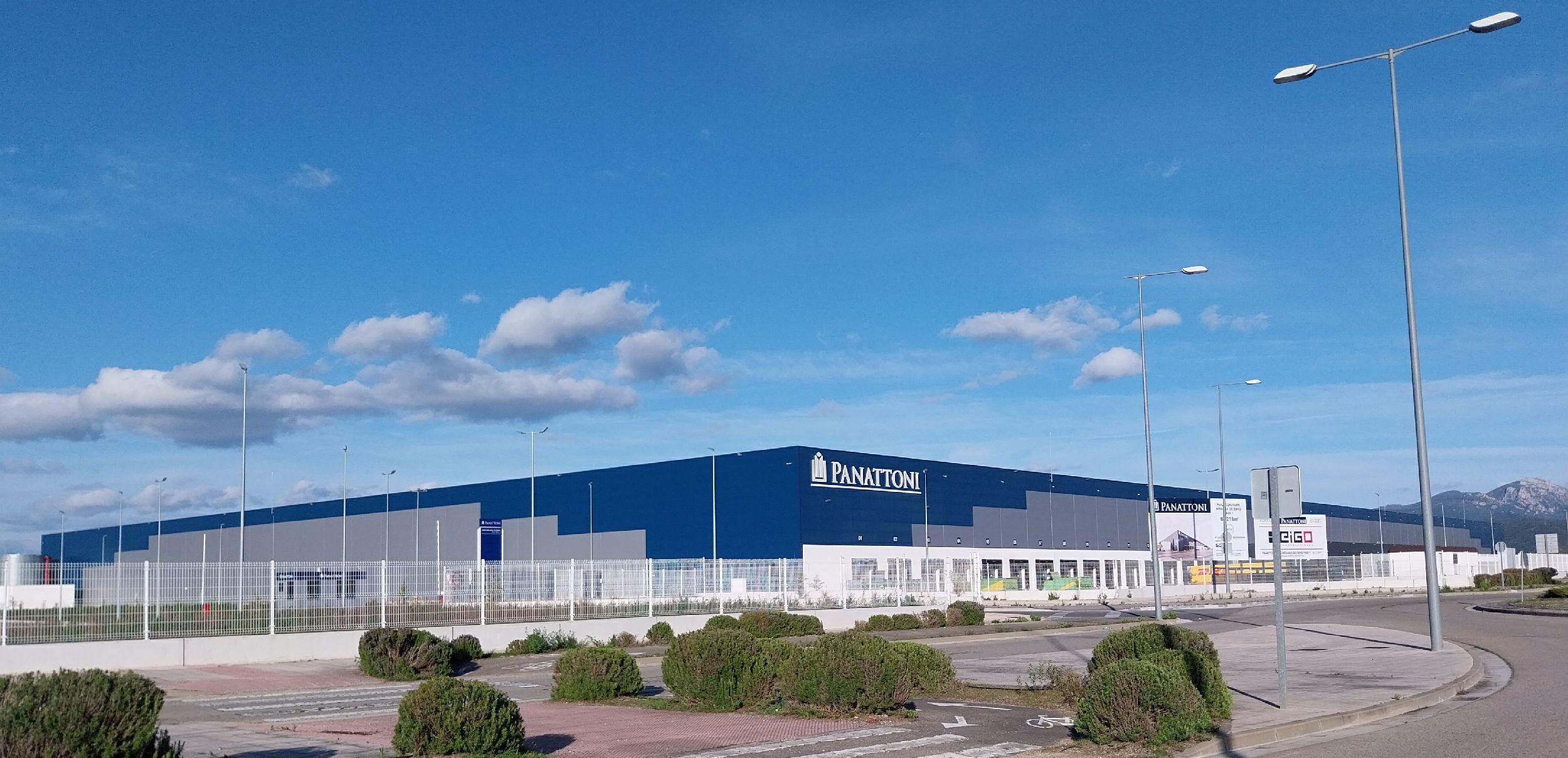
Germany let 5.5 million sq m of logistics space in the first nine months of 2026, 28% more than a year earlier. Poland let 3.8 million sq m, two thirds more. Logistics has overtaken offices as Germany’s largest commercial investment class, vacancy in Poland has fallen to 6.4%, and a tenant pays roughly twice as much per square metre in Munich as in Warsaw. The sheds are back at the centre of the market.
Germany: the strongest quarter since 2022
According to BNP Paribas Real Estate, take-up of logistics and industrial space in Germany reached 5.52 million sq m between January and September 2026, 28% more than in the same period of 2025 and around 9% above the ten-year average. The third quarter alone contributed almost 2.2 million sq m, 23% more than the second quarter and the highest quarterly figure since the second quarter of 2022. JLL, which uses a slightly different methodology, counts around 5.36 million sq m, a rise of 23% or almost exactly one million sq m, with 179 contracts of 10,000 sq m or more, 33 more than a year ago. Sebastian Bögel, Head of Industrial & Logistics Agency at JLL Germany, says that if the fourth quarter is as strong as usual, 2026 could pass the seven-million-square-metre mark. BNP Paribas Real Estate expects the full year to clearly exceed the 6.1 million sq m of 2025.
Logistics service providers are driving the recovery. They account for almost 45% of take-up, 2.5 million sq m, the highest volume BNP Paribas Real Estate has recorded for the sector in ten years. Manufacturers contribute 31% and retailers 15%. The largest leases of the year read like a map of the new supply chain: Ceva Logistics took around 90,000 sq m each in Frankfurt (Oder) and Lich near Giessen, Maersk around 69,000 sq m in Herleshausen in northern Hesse, ID Logistics around 70,000 sq m in Alsdorf near Aachen, Goodcang between 56,000 and 65,000 sq m in Rieste in Lower Saxony, Takko Fashion around 57,000 sq m in the Hanover/Brunswick region, and JD Logistics around 40,000 sq m in Ludwigsfelde south of Berlin.
The growth is outside the big cities
The headline number hides a geographic shift. The seven major logistics markets, Berlin, Dusseldorf, Frankfurt, Hamburg, Cologne, Leipzig and Munich, let just under 1.7 million sq m, 5% less than a year earlier and 8% below their long-term average. Frankfurt fell 20% to 320,000 sq m, Berlin 7% to 298,000 sq m, Munich 36% to 126,000 sq m. Only Hamburg (283,000 sq m, up 3%) and Cologne (247,000 sq m, more than double) grew. Everywhere else, take-up rose 51% and reached the second-highest level in ten years. The Ruhr area set a record with 484,000 sq m (plus 36%), with JLL noting that around 43% of its volume came from Chinese companies. Hanover/Brunswick reached 359,800 sq m and Osnabrück/Münster 259,100 sq m, almost three times the prior year.
Supply explains the pattern. In the five metropolitan regions tracked by JLL, only around 219,000 sq m was completed in the first nine months, half of last year’s level and 57% below the five-year average. The share of new buildings in take-up has fallen to 55%, the lowest in ten years, because there are simply fewer new buildings to lease. Around 883,000 sq m is under construction in the metros, 60% more than a year ago, of which about 55% is still unlet, and Berlin holds the largest share at 319,000 sq m. BNP Paribas Real Estate notes that the decline in speculative development is already limiting take-up in some major hubs. Occupiers who cannot find modern space in Frankfurt or Munich are signing in the Ruhr, in Lower Saxony and in eastern Brandenburg.
Rents up, yields holding, capital rotating into sheds
Scarcity is feeding through to rents. BNP Paribas Real Estate puts prime logistics rents at €11.25 per sq m per month in Munich (up 7% year on year), €9.00 in Frankfurt (up 10%), €8.85 in Dusseldorf, €8.80 in Hamburg, €8.60 in Cologne (up 12%), €8.30 in Berlin, €8.10 in the Ruhr and €5.70 in Leipzig. Across all locations, prime rents rose 4.3% and average rents 4.9% within twelve months. JLL, which quotes rents for lettings above 5,000 sq m, sees Berlin at €11.00 after a 4.8% rise in the third quarter alone, and expects further increases.
Investors have noticed. Cushman & Wakefield counts around €4.1 billion of logistics and industrial transactions in Germany in the first nine months, 18% more than a year earlier and 23% of all commercial volume. That makes logistics the largest commercial asset class in Germany for the first time, ahead of offices at €3.76 billion. LIP Invest arrives at the same €4.1 billion year to date, with €1.5 billion in the third quarter alone. The largest commercial deal of the quarter was CBRE Investment Management’s purchase of a logistics portfolio from Blackstone. CBRE reports that logistics prime yields held their level in the third quarter even as ten-year Bund yields rose to 3.64%, but expects yields across asset classes to move out in the coming quarters. The effect of the ECB’s rate rises on German property yields remains the backdrop.
Poland: two thirds more demand, half the rent
Poland’s warehouse market is running even hotter. According to REDD, tenants signed leases for 3.81 million sq m in the first three quarters of 2026, almost two thirds more than a year earlier, with 1.60 million sq m in the third quarter alone, two and a half times the prior-year quarter. AXI IMMO’s mid-year data showed net take-up (new leases and expansions) up 58% to more than 2.1 million sq m, and Cushman & Wakefield recorded the largest share of new leases since early 2022. Krzysztof Foks, Head of Research at REDD, attributes the surge to companies consolidating logistics into single modern buildings and to Asian e-commerce platforms holding stock in EU hubs after changes to EU customs rules.
The regional picture mirrors Germany’s in reverse. Upper Silesia let 890,000 sq m, more than four times last year, Poznan 520,000 sq m (up 349%), Wroclaw 568,000 sq m (up 72%) and the Tricity 283,000 sq m (up 125%). Warsaw, the largest market with 8.4 million sq m of stock, was the exception: take-up fell 13% to 478,000 sq m. The biggest transactions include ILS, the logistics arm of Inter Cars, with more than 165,000 sq m at Panattoni Park Katowice Airport, BESTSECRET with 108,000 sq m at EQT Park Poznan Zerniki, and Latex Opony with more than 100,000 sq m at Panattoni Park Bytom. Amazon’s 200,000 sq m build-to-suit facility in Dobromierz near Wroclaw was the largest completion of the third quarter.
Vacancy has fallen to 6.4% nationally, 1.6 percentage points lower than a year ago, with 2.71 million sq m available in a stock REDD puts at 42.2 million sq m. Central Poland is at 3.9%, Poznan at 4.7% and Wroclaw at 5.2%, which in practice means a tenant looking for 30,000 sq m immediately has only a handful of options. Warsaw is the outlier again, with vacancy up 2.6 points to 8.9% and more than a quarter of the country’s empty space. Developers have reacted: 1.62 million sq m was under construction at the end of September, down from 2.12 million sq m at the end of June, more than 60% of it pre-let or owner-occupied. AXI IMMO described the mid-year pipeline as the lowest in more than nine years. Completions of 2.03 million sq m in nine months (up 31%) are still being absorbed.
What has not moved is rent. REDD’s average headline rent is €4.70 per sq m per month, unchanged for the sixth consecutive quarter, with Krakow at €5.60, Warsaw at €5.40, Wroclaw and Poznan at €4.60 and Central Poland at €4.00. A modern warehouse in central Poland costs a tenant less than half of what the same space costs in Berlin or Frankfurt, and around a third of Munich. That gap, not the headline growth, is what is pulling occupiers east. On the investment side, AXI IMMO recorded around €782 million of industrial transactions in the first half (up 13%), Avison Young puts Poland’s total commercial volume at €4.7 billion after nine months (up 81%, the strongest since 2018) with €1.3 billion in industrial, and JLL expects warehouse investment to exceed €2 billion for the full year.
What this means for investors
- Logistics is now the core allocation, not the satellite. With €4.1 billion in Germany and a record year in Poland, the sector is attracting more capital than offices. Investors arriving late will compete with core buyers for prime product and should look at the second ring instead.
- Secondary German locations are where rents and take-up are growing. The Ruhr, Hanover/Brunswick, Osnabrück/Münster and eastern Brandenburg are absorbing the demand the metros cannot house. Land with planning consent in these regions is scarce and increasingly valuable.
- In Poland, buy the pipeline, not the vacancy. With the national rate at 6.4% and several regions below 5%, the available stock is thin. Pre-let or build-to-suit developments in Silesia, Poznan and Lower Silesia carry less letting risk than speculative space in Warsaw, where vacancy is rising.
- Underwrite Poland on rental growth, Germany on income. Polish headline rents have been flat for six quarters while vacancy fell; the next move is more likely up than down. German prime rents have already risen 4 to 12% and yields are stable, so returns there come from secure income rather than repricing.
- Watch power and planning, not just location. Many of the largest leases are build-to-suit facilities for automation-heavy operators. Sites with grid capacity and a short permit route command a premium on both sides of the Oder, as we have seen in the repricing of the grid queue.
Prime East is a real estate investment and development boutique with a presence in Hanover, Berlin and Warsaw. We acquire assets and development sites, advise on transactions on the buy and sell side, manage project developments and give investors structured access to opportunities in Germany and Poland. Logistics land in Lower Saxony and Brandenburg and build-to-suit sites in Poland are a core part of our pipeline.
Conclusion
Three quarters into 2026, logistics is the one asset class growing on every measure in both countries: leasing, rents in Germany, investment volume and share of the market. The constraint is no longer demand but supply. Germany’s metros have run out of modern space and are pushing tenants into secondary regions; Poland’s developers have cut the pipeline just as vacancy hit a multi-year low. For investors, the opportunity lies in the land and the pre-let developments that will fill that gap, and in a Polish rent level that has room to move.
Talk to us
Are you looking for logistics land, a pre-let development or a standing warehouse investment in Germany or Poland, or do you own a site that could become one? Prime East analyses locations, grid capacity and exit routes, and brings investors, owners and developers together. Contact our team for a confidential discussion of your investment or project enquiry.
Disclaimer: This article is for general information only and does not constitute investment, legal or tax advice. All figures are based on publicly available sources.
Sources
- BNP Paribas Real Estate: Logistics Market Germany Q3 2026
- BNP Paribas Real Estate (via LogRealDirekt): Logistik-Flächenumsatz steigt weiter an, Q3 2026
- JLL (via LogRealDirekt): Logistikmarkt steigert Flächenumsatz um eine Million Quadratmeter
- Cushman & Wakefield: Deutscher Immobilien-Investmentmarkt zum Dreivierteljahr 2026
- LIP Invest (via Konii): Marktbericht Logistikimmobilien Deutschland Q3 2026
- CBRE (via Architekturblatt): Immobilieninvestmentmarkt Deutschland: 23,2 Milliarden Euro
- REDD: Rynek magazynowy w Polsce: raport za I-III kwartał 2026
- AXI IMMO (via Eurobuild CEE): Warehouse demand strengthens as availability tightens in Poland
- Cushman & Wakefield (via Eurobuild CEE): Warehouse market tightens
- CIJ Europe: Central Poland’s warehouse availability tightens
- Avison Young (via Eurobuild CEE): Poland’s investment market rebounds
- JLL (via HandelExtra): Polski rynek magazynowy przyspiesza